Everybody needs good NABERS: sustainability at the GPA
In the property industry, acronyms like NABERS, BREEAM, EPC can get confusing. Here's what they mean.
At its heart, our sustainability strategy is about future-proofing. We are managing our resources today to ensure that natural ecosystems and public infrastructure can thrive for generations to come, rather than being depleted by short-term needs.
BREEAM
BREEAM (Building Research Establishment Environmental Assessment Method), NABERS UK (adapted from the successful National Australian Built Environment Rating System) and EPC (Energy Performance Certificate) are required standards for building capital projects – they’re our must-have ‘Core Design Requirements’ and they support the Government Buying Standards and Greening Government Commitments.
To date, all of our capital projects have delivered against the requirements of our Sustainability and Net Zero design guidance.
We are closing the gap in regards to our environmental commitments and required obligations and are well on the way to achieving a 50% reduction in CO2 emissions by 2032, 78% by 2035 and net zero before 2050.
But what does it mean?
BREEAM is the world’s leading, science-based suite of validation and certification systems for a sustainable built environment. It assesses, rates and certifies the sustainability performance of buildings, infrastructure and masterplanning across their entire life cycle, from design and construction to operation.
New build projects need to achieve BREEAM ‘Excellent’ and retrofitted projects need ‘Very Good’ or better, which ours have.
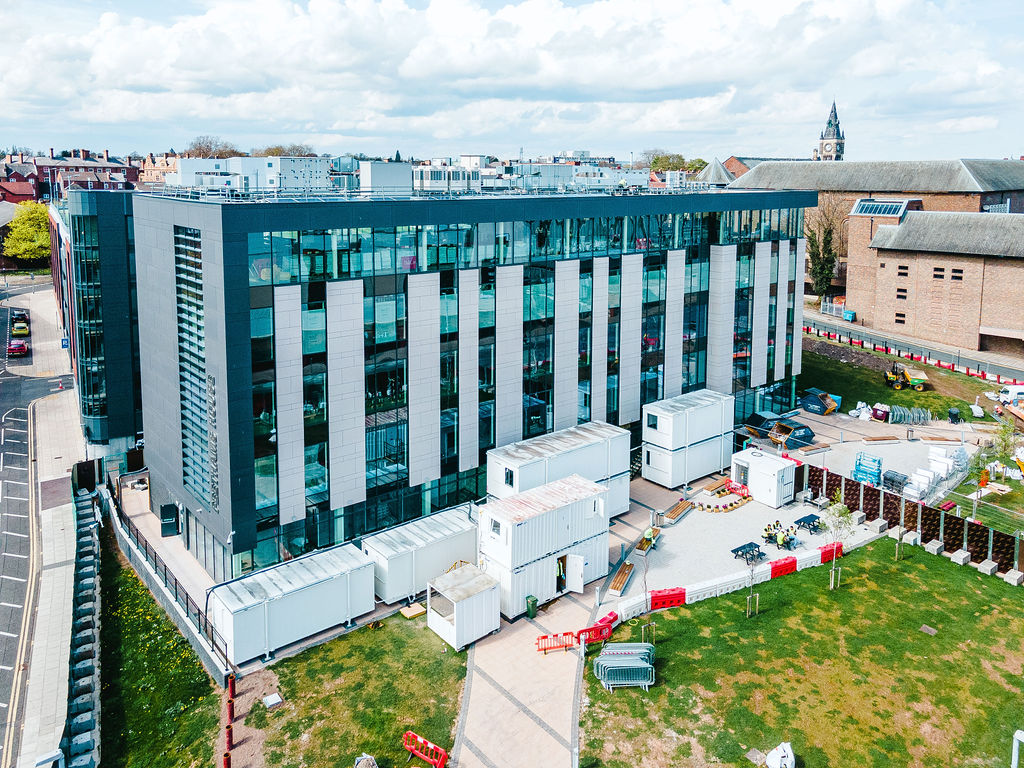
Our Darlington hub, Feethams House, is a standout example of what can be achieved through thoughtful refurbishment. By achieving the highest-ever BREEAM rating for a GPA retrofit, we’ve shown that existing buildings can be reimagined into high-performing, low-impact workspaces. It’s a great result that provides a modern, sustainable home for the Civil Service while making the most of the resources we already have.
The BREEAM standards deliver a healthier work environment, reduce pollution and also reduce the amount of energy, water and building materials used.
NABERS & EPC
NABERS UK is a voluntary, star-based rating system that helps building owners, operators and tenants by measuring the actual operational energy efficiency of commercial office buildings on a scale from 1-6. It identifies improvements and helps achieve net zero goals.
GPA new build projects need to achieve five stars and retrofitted projects four stars. This demonstrates low-carbon design, high operational performance and low energy costs.
An Energy Performance Certificate, or EPC measures a building’s energy efficiency on a scale from ‘A’ (most efficient, lowest bills) to ‘G’ (least efficient, highest bills). Valid for 10 years, it is required when selling or renting out a property in the UK.
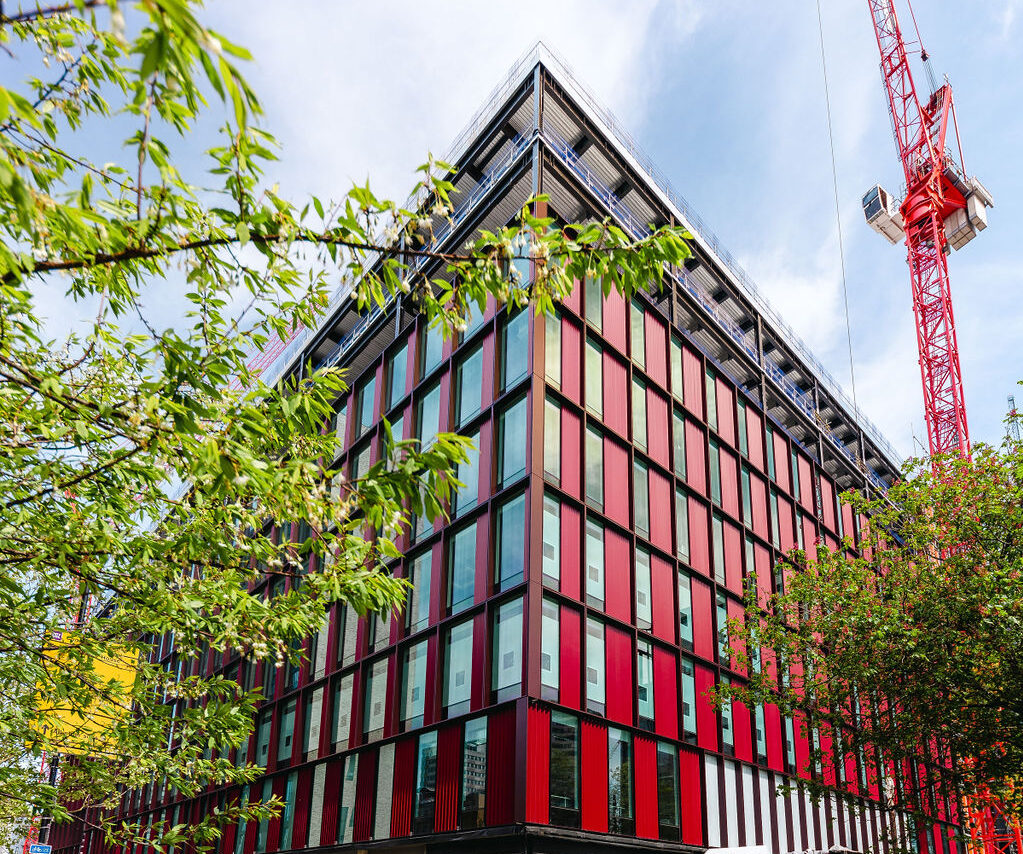
As NABERS UK has been a recent new requirement, it is great to see these pioneering projects at Croydon 2 Ruskin Square and Manchester First Street both achieving 5+ Stars. It is also no small achievement to see our London heritage projects achieving BREEAM ‘Very Good’ and EPC B, considering their age and historical complexity.
The process to achieving project accreditation
Early adoption of environmental design, particularly during RIBA (Royal Institute of British Architects) Stages 0 and 1 (Strategic Definition and Preparation/Briefing), delivers the best project outcomes by maximising the ability to influence environmental performance while minimising costs.
By embedding sustainability from the outset, rather than treating it as an add-on, the GPA is maximising effective design strategies such as optimal orientation, shading and natural ventilation, and drastically reducing long-term energy consumption and capital costs.
To support this, we have an in-house team of environmental experts that can be drawn upon at all stages within a project lifecycle.
What do these achievements mean for the taxpayer?
In a nutshell, better design means less. Less materials, less energy, less carbon and less cost. Efficient buildings are also delivering against the government’s environment objectives, whilst supporting various other aims such as nature improvements and the provision of quality working spaces.
Innovation Spotlight: the blue roof!
Our Manchester First Street hub has a blue roof but it’s probably not what you think.
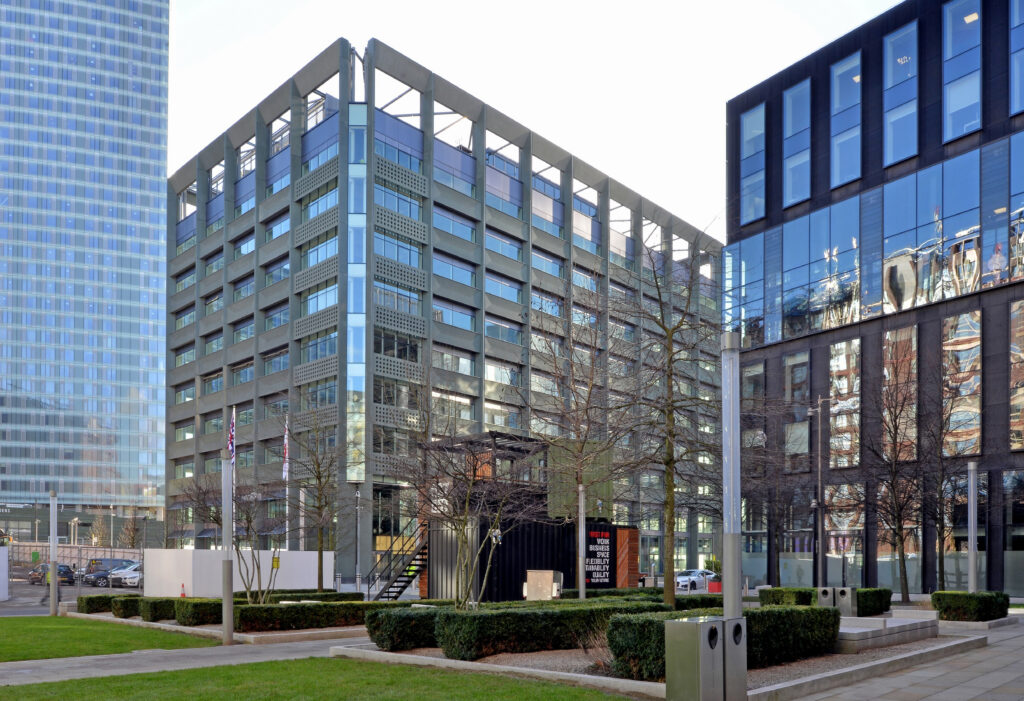
In built-up environments on low lying land (near the coast, rivers, marshes, etc. or areas with poor natural drainage) – the faster the rain hits the roofs and goes into gutters, the quicker it gets concentrated into the local water or river system.
That’s where a blue roof comes in. Despite the name, they aren’t actually blue. Unlike a gravel roof, they are designed to hold and drain water gradually, to stop a fast stream of water that would otherwise cause flooding.
This is just one of the features making Manchester First Street one of the most sustainable buildings in the city.