
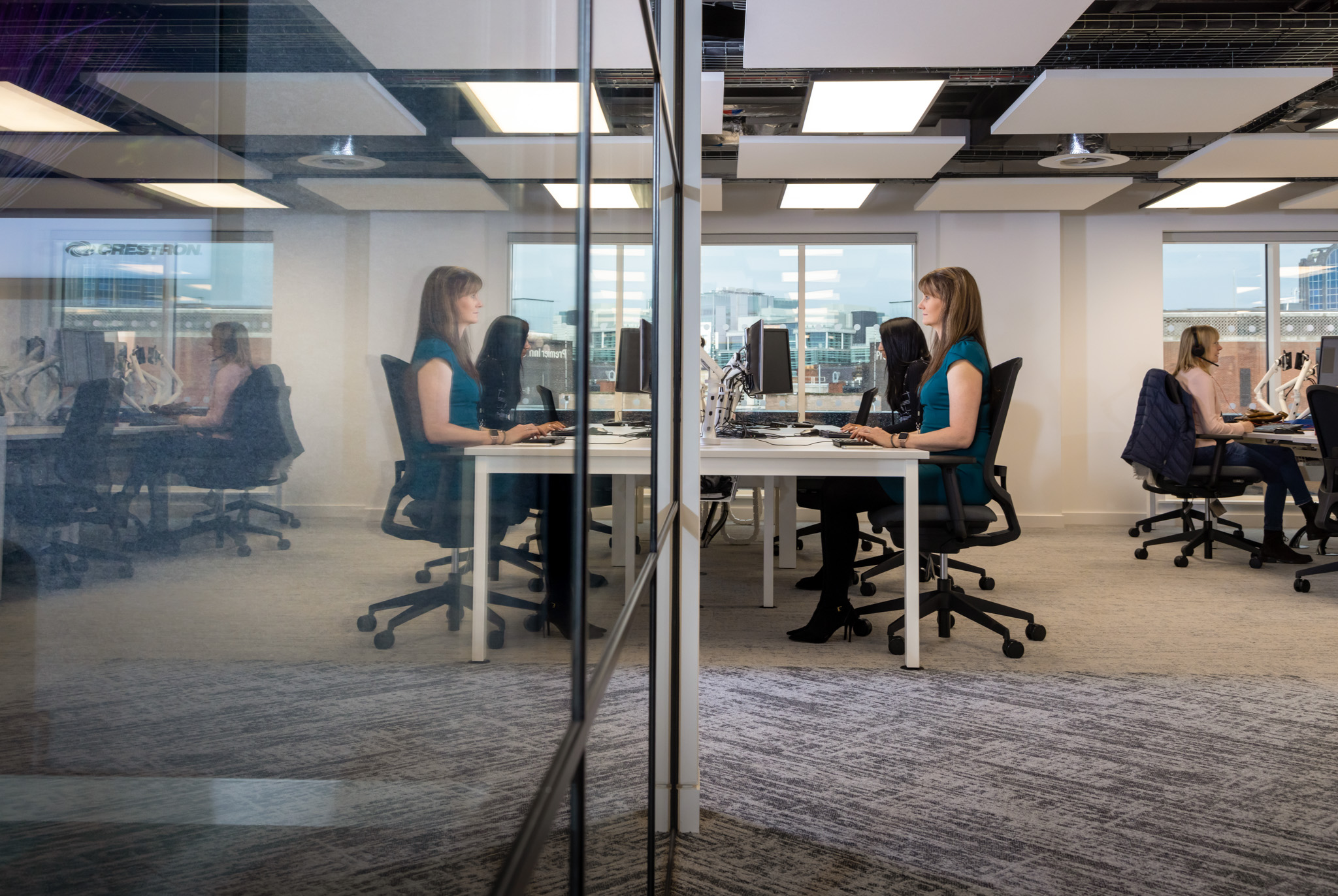
Desk, desks, desks? Here’s why it’s not always the answer.
Civil servants don’t just need a place to sit; they need a space to thrive. We've surveyed more than 60,000 civil servants to understand how to shape workplaces that truly work for them.
Civil servants don’t just need a place to sit; they need a space to thrive.
We’ve surveyed more than 60,000 civil servants to understand how to shape workplaces that truly work for them.
In the evolving landscape of modern work, the role of the traditional office desk is undergoing a re-evaluation.
We now know that productivity isn’t solely tied to desk availability but rather to how well a workspace supports different working styles.
31.5% of civil servants work in a collaborative or highly collaborative workstyle. They thrive with access to:
- Quiet areas for deep focus
- Collaborative spaces for teamwork
- Relaxation zones for recharging
Overloading an office with desks can disrupt this balance, reducing efficiency.
The people working from our buildings also value workplaces that support wellbeing, community and creativity. When they feel a sense of community, they are 58% more likely to thrive at work and 66% more likely to stay with their organisation.
A desk is only useful if it supports the way people actually work. If an office becomes too noisy or lacks spaces for quick conversations, desks can become obstacles rather than assets.
More desks? Not always the right answer. Smarter, flexible office design is the best strategy for success.