
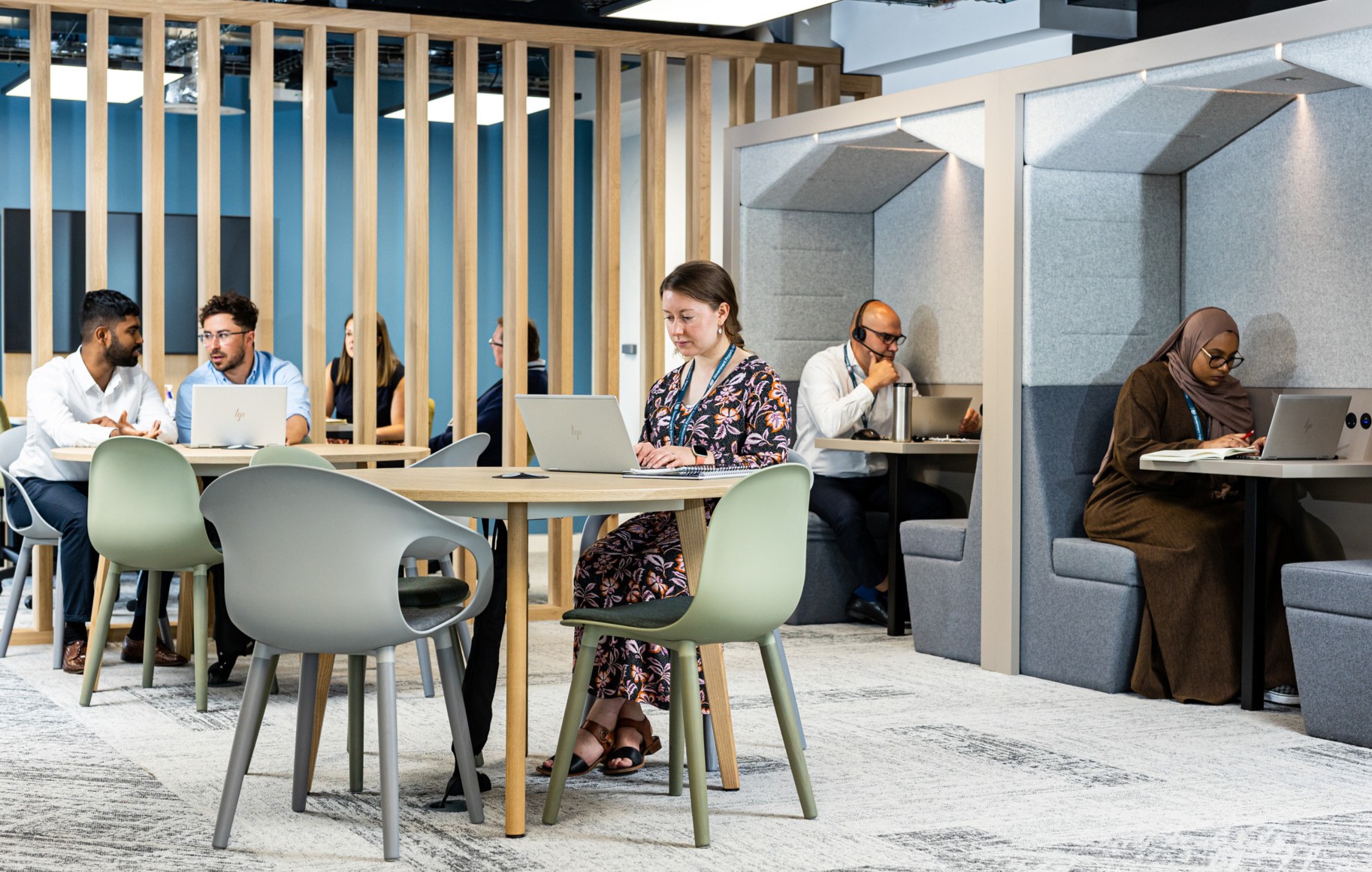
Delivering exceptional workplace experiences at our Birmingham hub
We create exceptional workplaces for civil servants, whether they are in Peterborough, London, Darlington or beyond, whether we are refurbishing a heritage site or building a new hub from scratch. Rather, we carefully consider the factors that make for genuinely productive and inclusive workplaces, shaping the office experience so that teams can work creatively and effectively.
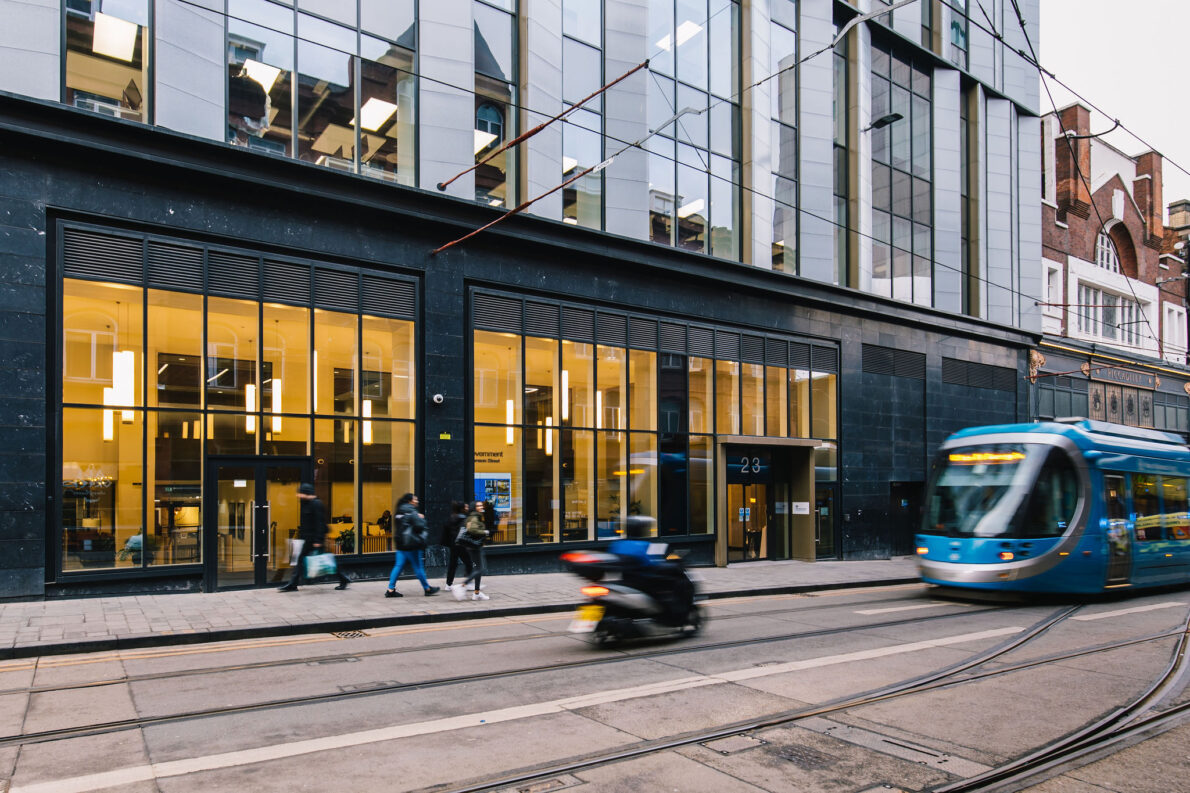
And this focus brings good results. In July 2022, we officially opened the doors to our Birmingham hub at 23 Stephenson Street. We transformed a disused retail space in the city centre into a modern, digitally connected and inclusive workspace designed to host 1,700 civil servants from 20 government bodies. It has since been recognised twice as one of the best public sector offices in the world – no mean feat.
Good design has, of course, played an essential role in this. But success has also been driven by how we’ve shaped the workplace experience for people who use the space. Our work doesn’t stop when a building is completed and furnished. Helping to foster a strong, friendly community after civil servants, our clients and customers, have moved in is part of the job too. In fact, in our experience, it is vital to creating places where people can thrive at work.
A meticulous approach
Our approach is a finely tuned mix of art and science, combining our technical excellence and expertise with human insight to understand and enhance the way people work.
To achieve this, our customer experience team has designed a bespoke framework, which tracks the Royal Institute of British Architects (RIBA) plan of work for building projects. While the design and construction teams focus on the functionality, the customer experience team brings the workplace to life – creating a place where employees are comfortable, can concentrate, be creative, collaborate with colleagues and accomplish the work they need to.
The framework in action at Stephenson Street
Our customer experience framework is all about getting under the skin of government organisations. Listening to what their unique goals are, coupled with the wider government strategic objectives, and understanding everything they need from a workplace to achieve them is important. We learn about the way their employees work, the spaces and services they need, and tailor our approach around them while sharing best practice from the wider world of work too.
Broadly there are three key stages:
1. Preparing for change
Our remit at the Government Property Agency is to deliver a smaller, better, greener government office estate. It’s a major transformation programme across the UK, and making sure we bring Civil Service teams on the journey with us is vital to success.
To support this the hub’s city centre location and proximity to Birmingham New Street train station promotes green travel, whilst rooftop solar panels and intelligent lighting support carbon reduction in line with the government’s Net Zero ambitions. At Birmingham, we knew that the transition to a shared hub might feel very different from how some people were used to working. Education and engagement was key.
Our job was to get everyone enthused about how the new hub would improve ways of working, boost productivity, support greater wellbeing and contribute to the wider organisational objectives. We talked to all levels of staff to gather data about their ways of working and identify areas of improvements that we could incorporate in the new workplace.
2. Facilitating the transition
The second stage focuses on occupation planning and ensuring the building is ‘ready for use’ from a customer perspective. Along with people, we thoroughly plan for moving IT and technology systems so that the switchover is seamless, without causing disruption to work and ensuring business continuity.
Having multiple government bodies taking space at Stephenson Street added layers of complexity to this task as we moved different teams and their IT support across. We put in place extensive guidance explaining how different spaces, facilities and services are designed to be used for improved ways of working and greater inclusivity.We hosted many induction days to allow civil servants to become familiar with their new work environment ahead of making the move.
People often like the reassurance of human interaction and to ensure a great day one and week one, we set up a network of client move champions. Their role was to be a friendly on-the-ground guide and trouble shooter for their colleagues during the initial move-in phase, helping them to discover all the great features of the new space.
This people-centred approach was in place long before the move began. Inclusivity is a strong theme in the hub’s design, underlined by the building’s automatic doors, braille wayfinding, universal toilets, wudu space, wheelchair accessibility and a dedicated guide dog facility. The hub was also the first GPA-delivered hub to receive Inclusive Environments Recognition from the Construction Industry Council.

3. Sustaining success
The final step is keeping things running smoothly long term. At the Birmingham hub, as clients and customers have settled in, our work has evolved. To promote co-working we actively encourage people to view the hub as a shared space rather than a collection of individual offices.
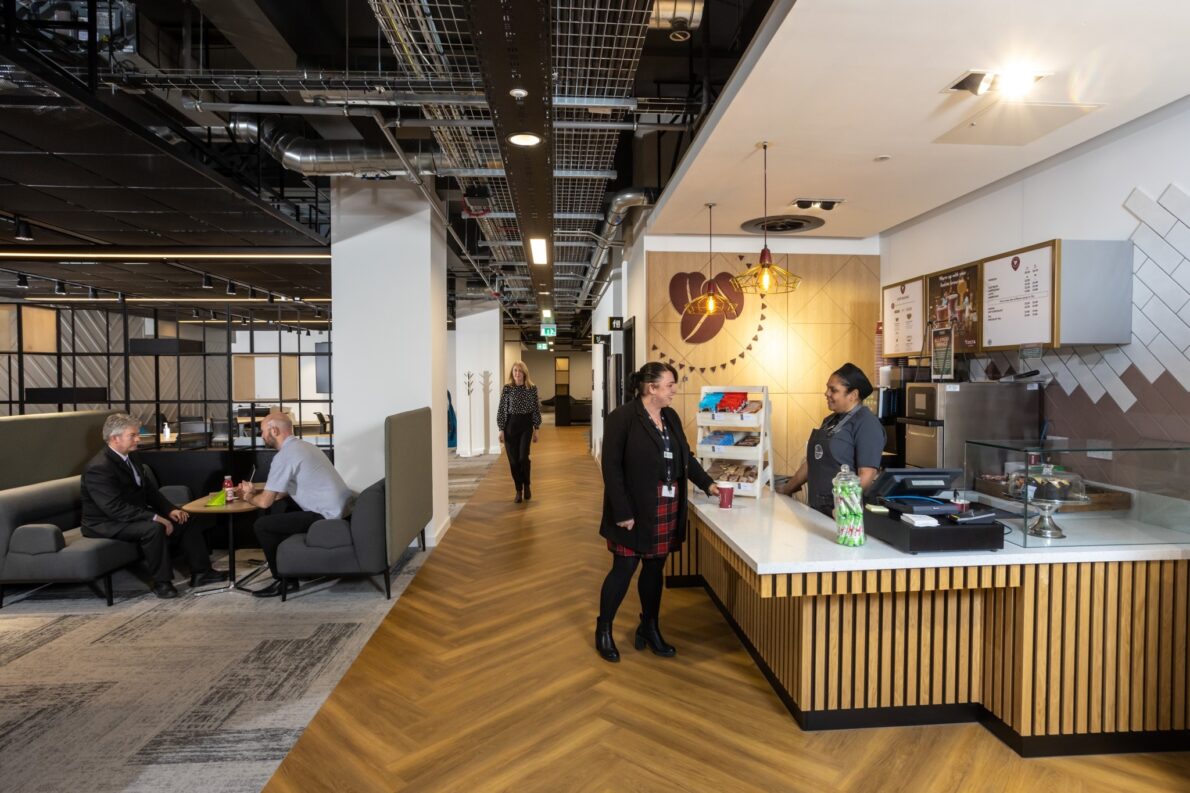
With this in mind, the building features spaces specifically designed for community engagement events, as well as digital signage at key gathering points to publicise events and projects across the space. The community at 23 Stephenson Street is further strengthened with its connection to the local area, with the building’s town hall space regularly hosting large-scale cultural and community events and partnerships for external organisations, including West Midlands Police and the University of Birmingham, as well as government departments. Health was also built into the community ethos, leading to the inclusion of biophilia, a wellbeing room, healthy food offerings and spaces for activities such as yoga.
This mindset is critical to giving everyone the confidence to access the spaces and facilities they need to carry out their work. Data from our post-occupation assessments help us to keep on top of people’s changing needs, particularly those who may require additional support.
Key takeaways
After the complex architectural design and construction work is complete, moving teams into fantastic new workplaces may sound like the easy part. But when you’re shaking things up and helping people transition to brand new ways of working, there can be some hiccups along the way. That’s why it’s imperative to have an approach rooted in expertise and data to measure and analyse people’s experiences and plan effective workplace strategies.
What we’ve learnt in our work is that working in partnership with departments is crucial, engaging with them early and maintaining open communications throughout an office move to pave the way for change. Providing assurance and regular progress updates on things like readiness for occupation and at agreed milestones throughout the project helps to cement a good working relationship and build trust.
In the end it comes down to being ambitious, as a collective with our client departments. Our buildings are where future policy decisions will be made, and we take pride in delivering against that responsibility.