
Core design requirements
Our core design requirements, set out as part of the Government Workplace Design Guide.
Establishing our core design requirements
The Core Design Requirements (CDR) establish the mandatory standards for every new GPA workplace project. They form a definitive baseline, ensuring our clients have confidence in the quality and approach applied from the outset.
Customer-focused
A modern government estate for a modern Civil Service
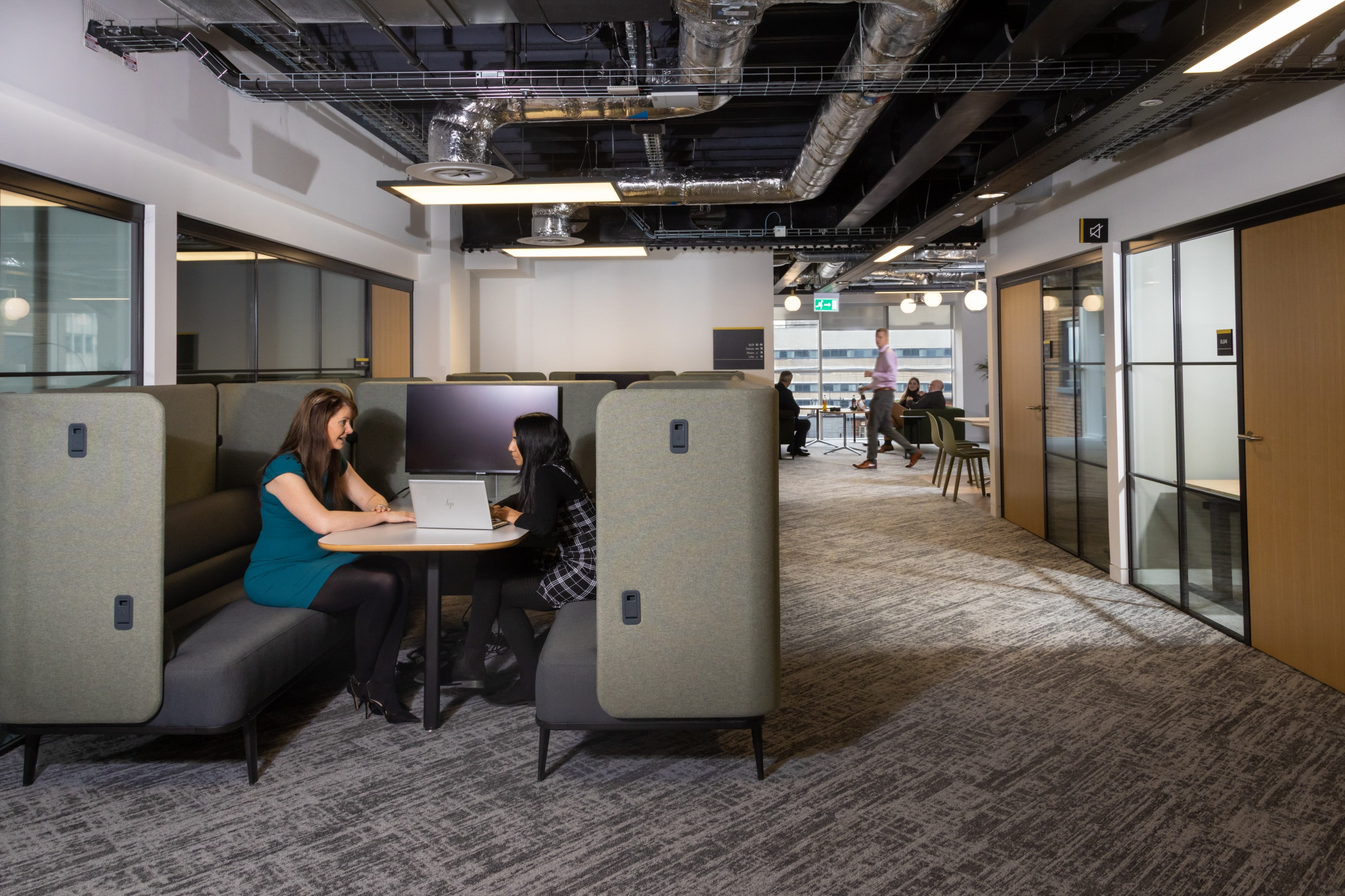
We are committed to providing workplaces that meet the needs of all users, with wellbeing, flexibility, and performance at the core of our approach. Spaces are designed to cultivate community and create positive experiences that enhance the way staff connect and work. We provide a range of high-quality work settings that support different ways of working and enable people to work effectively across teams, locations and activities. All spaces are designed to be inclusive, with accessible work settings provided on every floor.

Access to wellbeing spaces
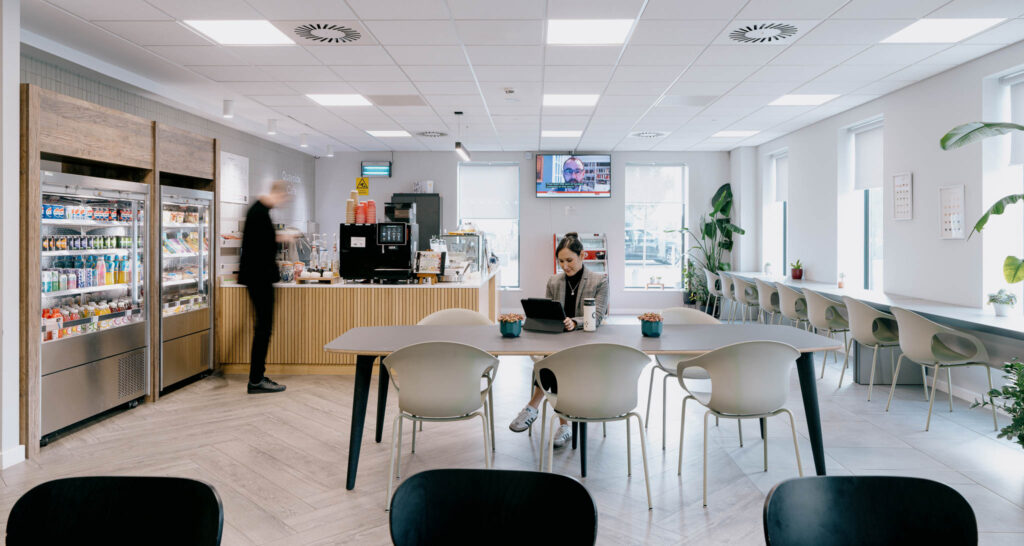
- Access to facilities including refreshment, reflection and recovery spaces.
- Practical amenities such as cycle storage and changing facilities to suit the site location and number of occupants.
Workplace occupancies
- Building occupancies are prescribed to ensure suitable workspaces and ergonomic conditions are provided for users.
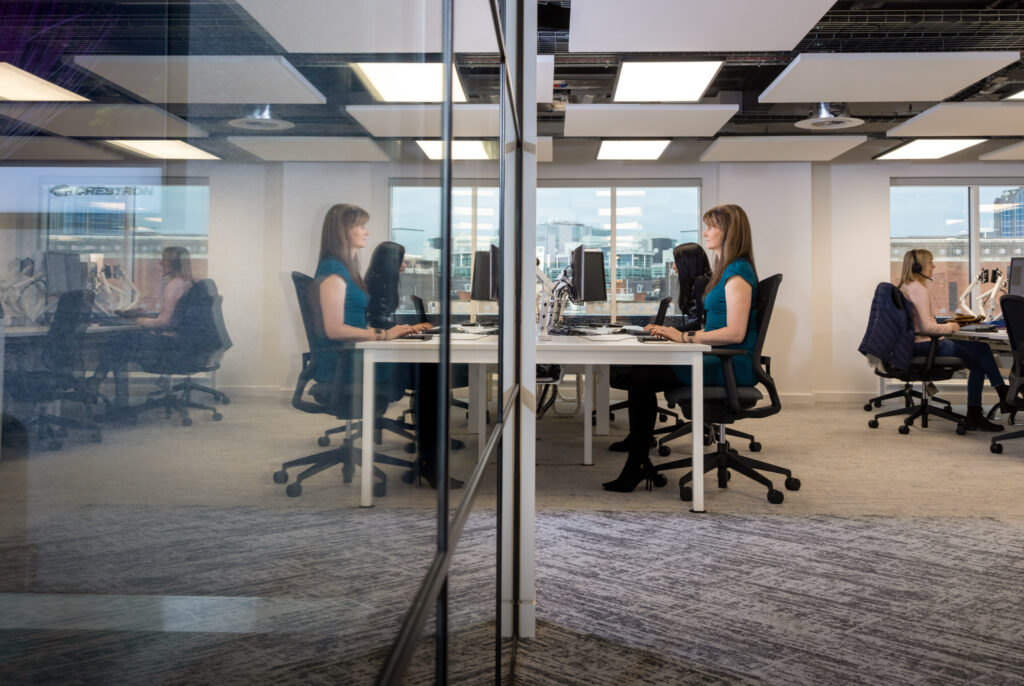
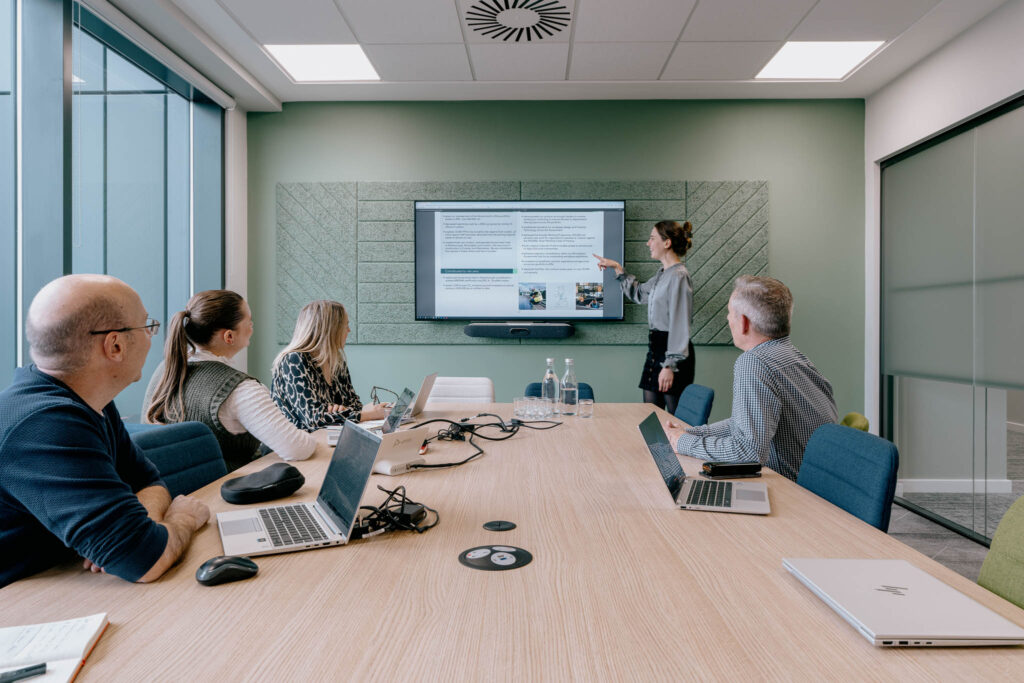
- Balanced mix of provision of each of the three key working zones: team home, meeting and do not disturb, to ensure varied options for users to choose appropriate workspaces.
User comfort
- Provision of staff lockers for personal belongings on each level.
- Ceiling, wall and floor finishes selected to minimise background noise and support clear speech and audible information.
- Provision of high-quality ergonomic and adjustable furniture.
- Lighting design to complement architecture and interiors, combining natural and artificial light to suit each space.
- Natural ventilation incorporated wherever practicable to support thermal comfort and air quality.
Digitally connected
A modern government estate for a modern Civil Service
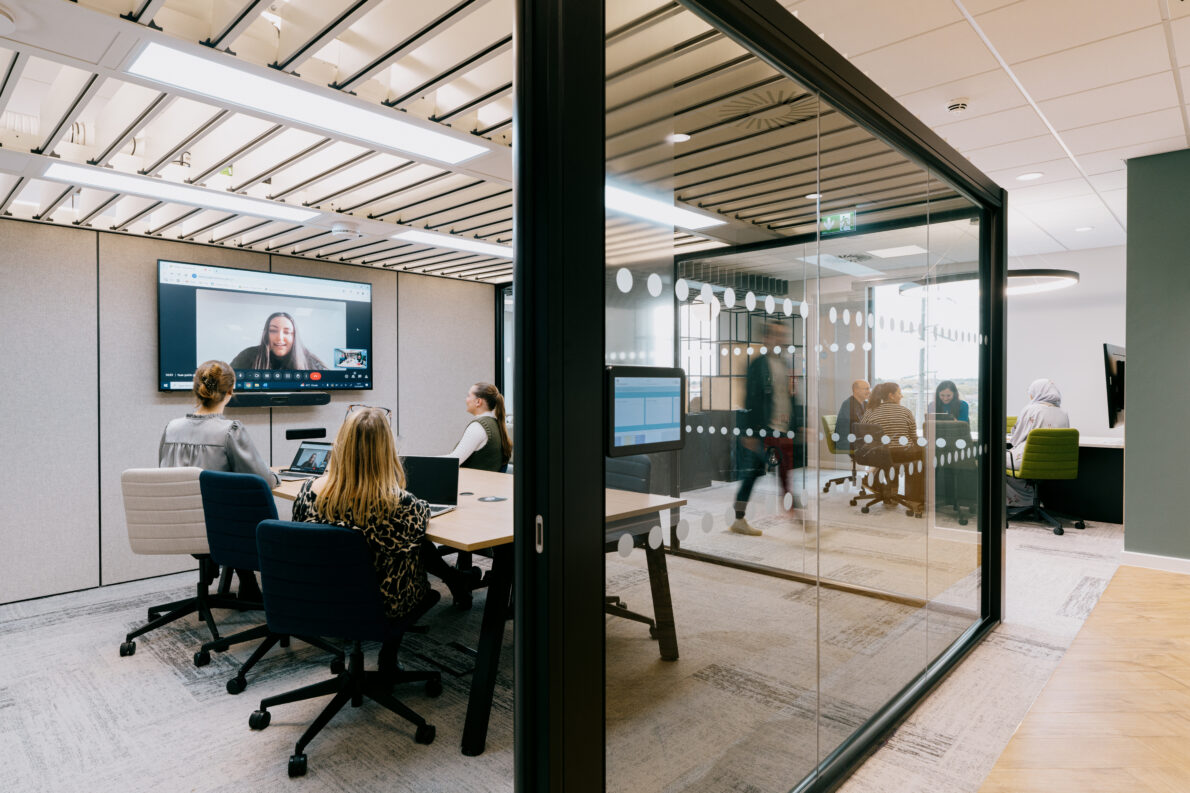
Our workplaces are digitally connected and designed to help government staff move easily within and between buildings – supporting collaboration, smarter ways of working and more effective use of the estate. By combining technology, space and policy, we enable modern service delivery, improve staff engagement and support a more flexible, connected Civil Service.
It is our ambition to provide a secure, interoperable digital infrastructure that allows teams to work across departments and locations, while maintaining the appropriate balance between user experience and security.
Interoperable digital infrastructure
- Shared networks providing common wired and / or wireless technology, allowing guest user access to the internet, via GovWiFi, and connection to corporate IT resources, via a virtual network.
- Audio visual (AV) facilities, provided in shared meeting spaces, which are compatible, intuitive to use, and capable of connecting to corporate IT systems.
- Common access passes to give access to allocated buildings and non-classified spaces using a single pass.
Inclusive
A modern government estate for a modern Civil Service
We are committed to providing workplaces that are welcoming to all users, with accessibility and ease of use at the core of our commitment to class-leading inclusive design. We actively design out physical and cognitive barriers by embedding accessibility throughout the building, supporting users with both visible and non-visible disabilities.
Access and movement
- Access achieved through unassisted (non-mechanised) step-free means.
- At least one passenger lift that can access all levels and workspaces.
- A dedicated passenger evacuation lift.
- Powered-operated doors to main circulation routes, stairs and accessible facilities.
Toilet and shower provision
- Single sex toilets, provided and accessed from a separate lobby.
- A minimum 20% universal toilets on each workspace level.
- Newly constructed toilets in the form of ‘toilet rooms’.
- Provision of a ‘changing places’ WC, where the building / project has a BEC in scope.
- Single-sex shower facilities to be provided and accessed from a separate lobby.
- Newly constructed showers are to be ‘shower rooms’ with a minimum of 20% overall shower provision as universal shower rooms.
Finishes and furniture
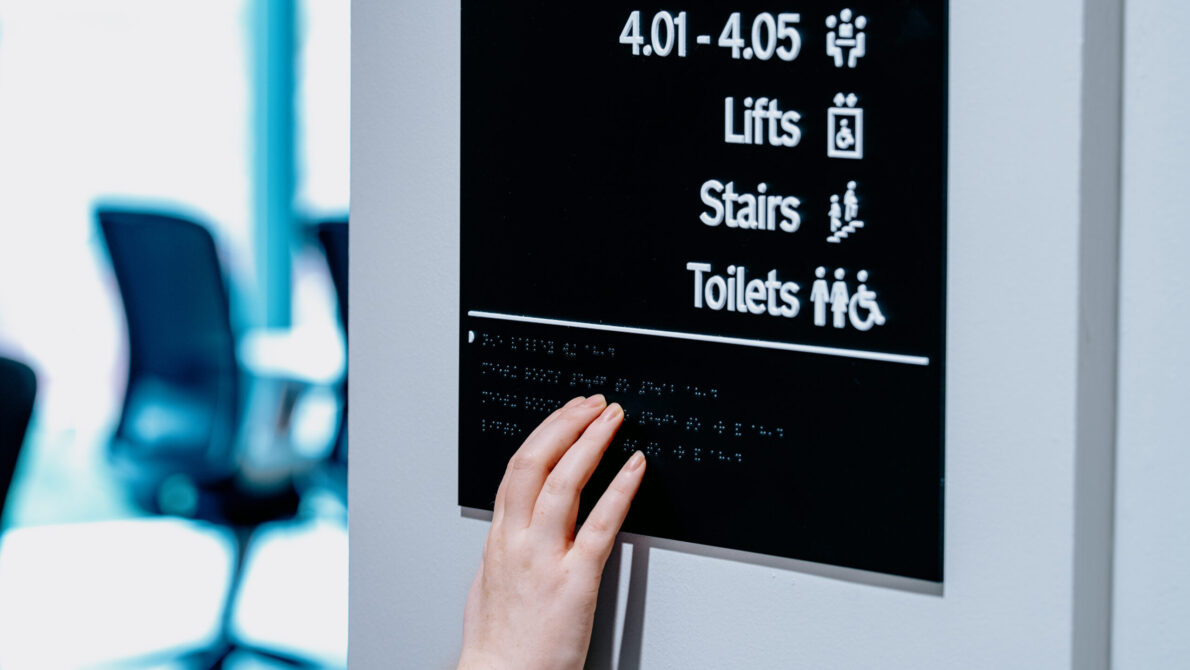
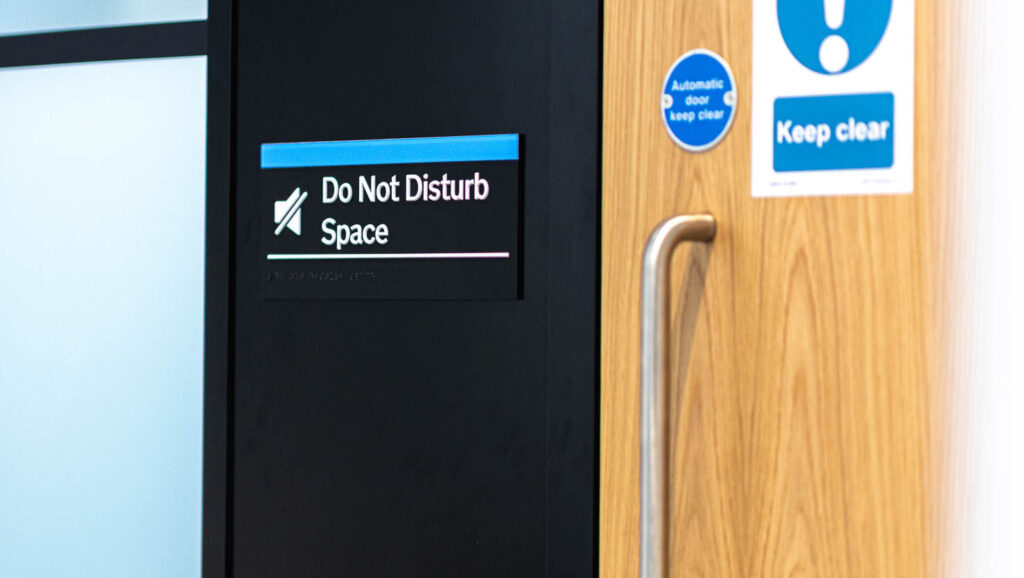
- Clear, visually contrasting signage, enhanced with braille. Assistive listening devices where needed.
- A minimum of 50% height adjustable desks.
- Fully inclusive facilities, including refreshment facilities and meeting rooms.
- Sensory neutral spaces which complement the project look and feel, without causing visual discomfort.
- Designated ‘do not disturb’ areas, provided to minimise acoustic and visual distraction.
Safe and secure
A modern government estate for a modern Civil Service
We are committed to providing workspaces that are designed to be safe, secure and resilient, protecting those who use them; while supporting a modern, efficient working environment. Security is carefully integrated into the design of each building, ensuring that measures are proportionate, unobtrusive and tailored to the specific site and operational context. We take a comprehensive and evidence-led approach to protective security, combining physical, electronic and operational measures to manage risk effectively and respond to evolving threats.
Security measures
- Security measures incorporated into the building, based on the levels of utilisation.
- Proportionate protection to the site and building perimeters.
- A security control room, sized and located to suit site specific requirements.
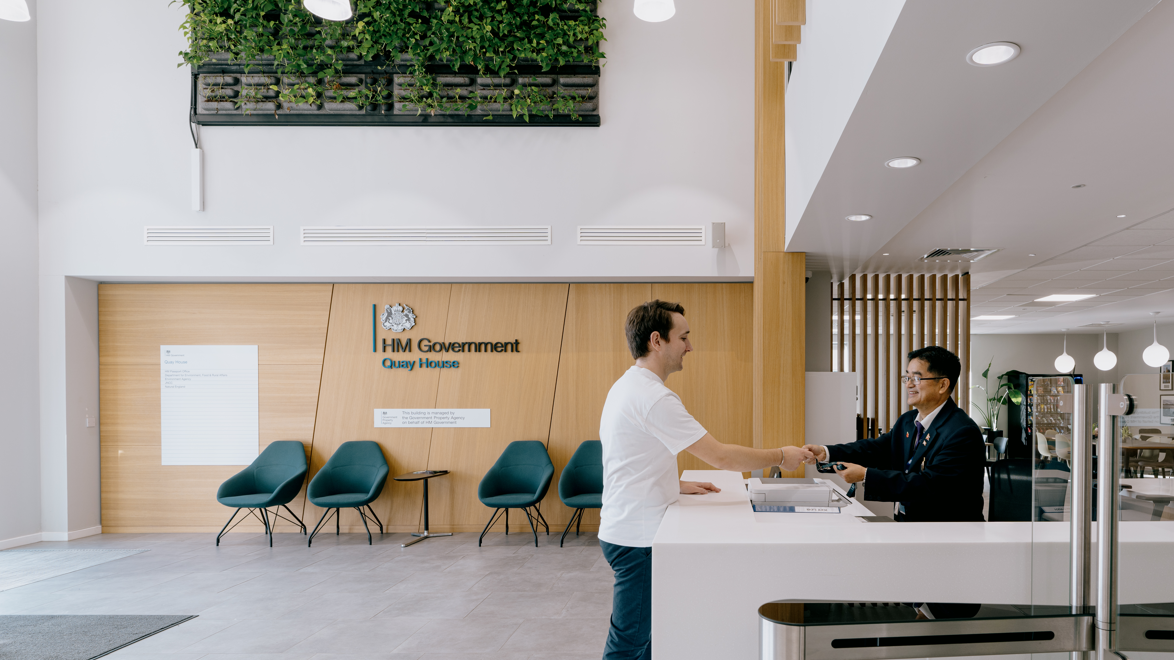
- Controlled access measures at the main reception, with electronic surveillance and access measures at key entry points, public zones and secured areas.
- A resilient network designed to minimise system outage in the event of an incident.
- Appropriate and resilient security measures for secured / confidential spaces.
- Wherever appropriate, safety measures at the main entrance and site perimeter to mitigate hostile vehicular attack.
- Acoustic treatments for secure or specialist areas.
Sustainable
A modern government estate for a modern Civil Service
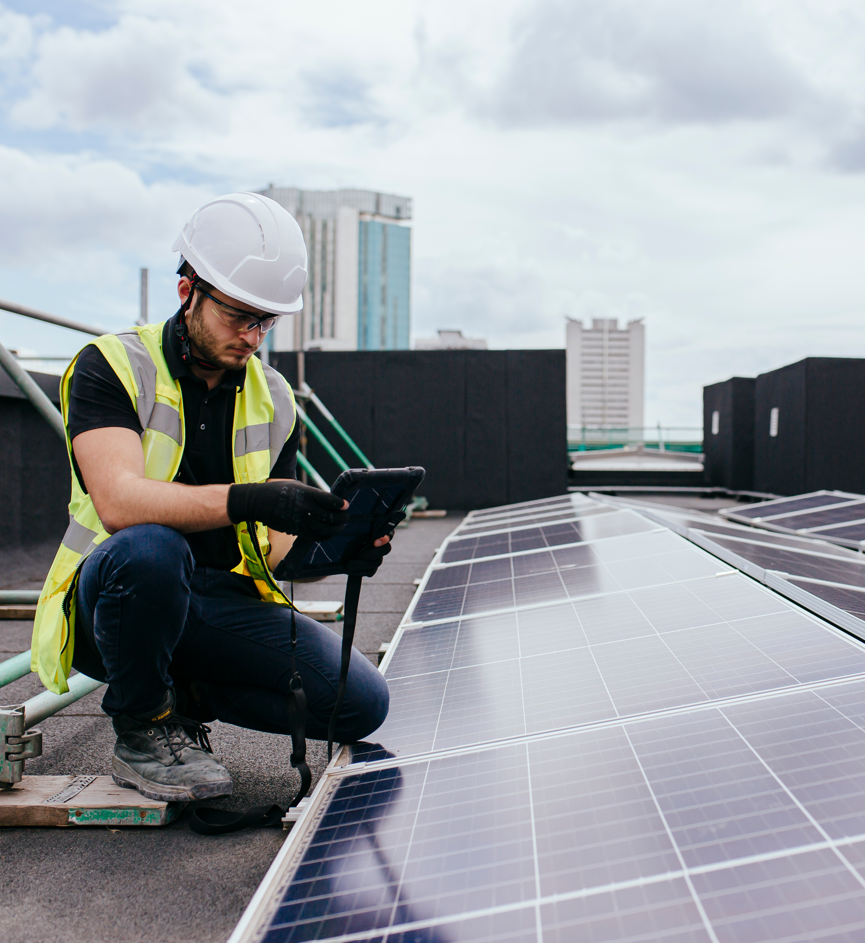
Our workspaces maximise the use of sustainable, clean technologies and low and zero carbon energy. We embed sustainability at every stage of the project lifecycle, from design and construction through to occupation. We are committed to supporting the UK government’s ambition to achieve Net Zero carbon emissions by 2050.
Our approach prioritises energy efficiency and long-term performance, using modern building systems and smart technologies. All of our building projects are delivered to adapt to future climate change scenarios to ensure resilience for ourselves and the clients and customers who rely on our services.
Project specific targets and strategies
- Designs in line with environmental and energy efficiency targets.
- Project specific energy strategy, with no reliance on-site fossil fuels.
- Enable ongoing measuring and monitoring of operational energy, water and indoor air quality.
- Preparation of a travel plan.
Material sourcing and waste management
- Whole life carbon reduction strategy and project specific target for upfront embodied carbon.
- Provide adequate space and facilities to manage the disposal of operational waste, including separate waste streams for recycling.
- Use of renewable and responsibly sourced products, including timbers and timber-based products.
Biodiversity enhancements
- Demonstrate enhancements in biodiversity.
- Diversity in planting schemes, with a 90 / 10 ratio of native versus non-native planting species.
- Achieve 100% BREEAM ecology credits in development.
Consistent
A modern government estate for a modern Civil Service
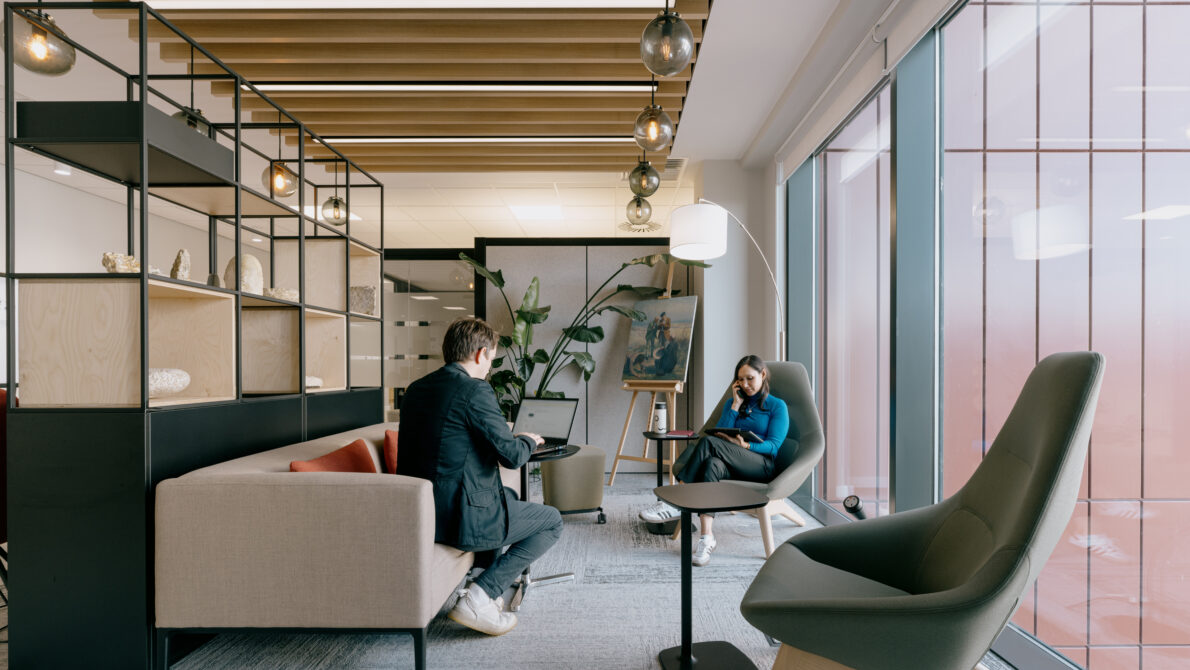
Our workplaces are designed to deliver a consistent, high-quality experience across the government estate, combining clarity of identity with flexibility and long-term resilience. Design quality, modularity and smart working principles are embedded throughout; enabling spaces to adapt as organisational needs evolve, whilst maintaining a coherent and recognisable look and feel.
Operations
- Facilities designed to support effective day-to-day operation and maintenance.
- Provide standby and life safety generators, to back up supplies to equipment and systems.
- Deliver projects in accordance with the Mechanical, Electrical and Plumbing (MEP) End-to-End Process.
- Maintain indoor air quality and ensure carbon dioxide levels remain acceptable.
- Develop catering strategy to suit building needs.
Flexibility
- Spaces designed to a standard modular grid, with agile space planning to allow for reconfiguration with minimal disruption.
- Deliver BIM Level 2 as a minimum.
- Use property and employee experience data to continuously develop and improve the workplace experience.
Identity and branding
- Consistent approach to graphics, signage and wayfinding.
- Government branding in public areas.
- Regional and cultural references using artwork and graphics.
- Planting and artwork strategies developed holistically, as part of the overall interior design strategy to contribute to a strong sense of place.
Explore more of the Government Workplace Design Guide
Business events centre (BEC) zone
Business events centre overview, set out in the workplace design guide
7/9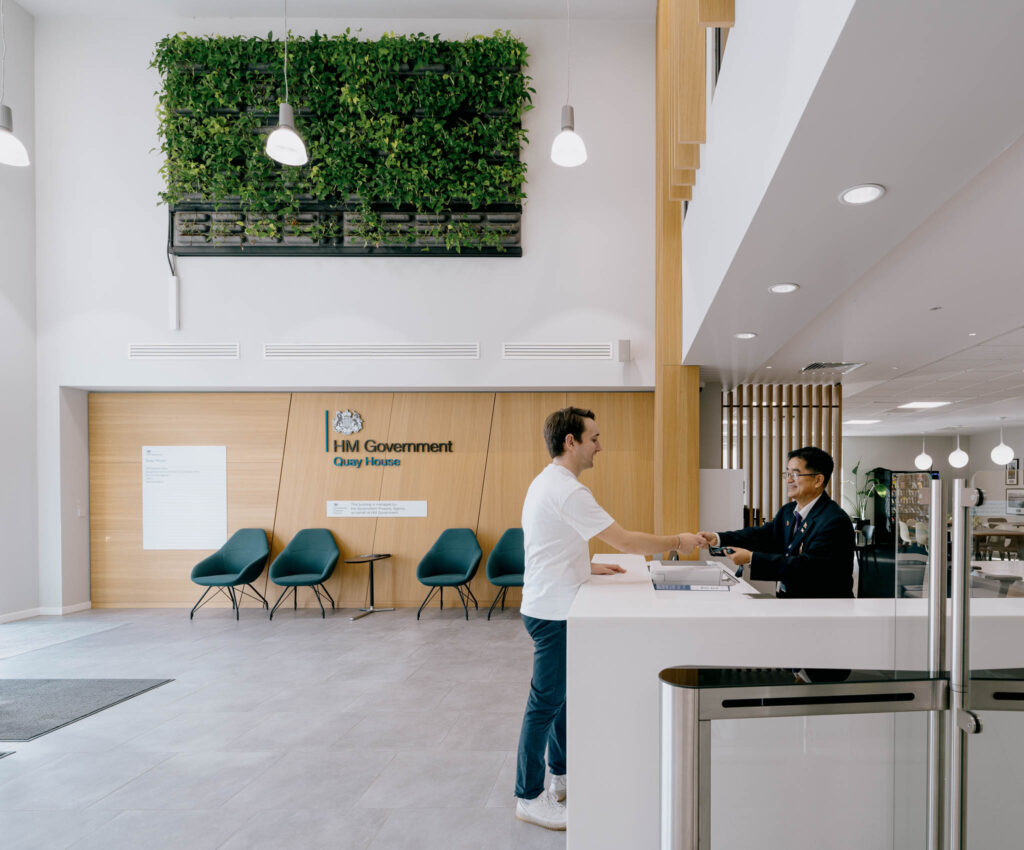
The Government Workplace Design Guide
This Government Workplace Design Guide is one of a suite of guidance documents and standards setting out the aspirations for government and public sector workspaces.
9/9